LEARNING TOGETHER / SAKE WORKSHOP
Getting to Know Sake
Discover the story behind a glass. Find new words to share it.
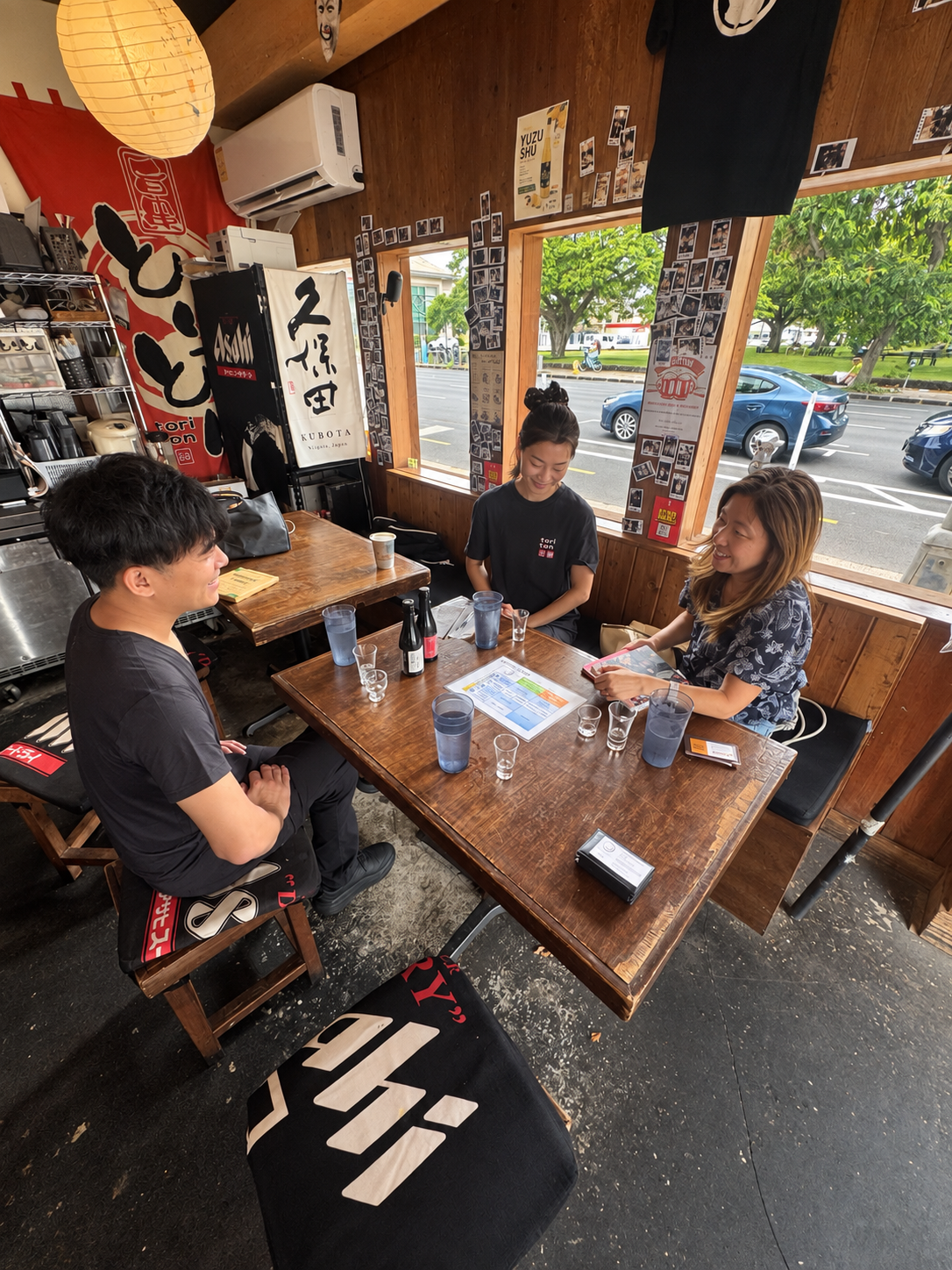
A few bottles, tasting glasses, and a table at Tori Ton became the starting point for a sake workshop. With an instructor who shares Japanese sake overseas and supports restaurant sake menus, we explored the culture behind the drink, compared flavors, and talked about how to introduce sake to our guests.
The goal was to connect what we learn with what we do each day. Knowing where a sake comes from—and why we enjoy it—can make a recommendation more personal and help a guest discover something new.
A glass with a place and a story
The workshop began with omiki: sake offered to the gods. The instructor explained how sake has long been woven into rice farming, seasonal celebrations, and gratitude for nature. That history gives us another way to understand what we pour at the table.
Sake also connects us with the people who make it. The instructor spoke about regional breweries, rice farmers, and skills passed from one generation to the next. Enjoying their sake can help support the next season of brewing and the community around it.
Water, rice, and a brewer’s choices give each sake its character. Rice is not always grown in the same area as the brewery, which makes learning its origin part of the discovery. The instructor encouraged us to imagine the landscape and the people behind a bottle—as if a sip could be the beginning of a small journey.
Here in Hawaiʻi, where care for the land matters deeply, these stories can offer a meaningful connection. Even a short introduction to a sake’s origin can open a conversation beyond its name or price.
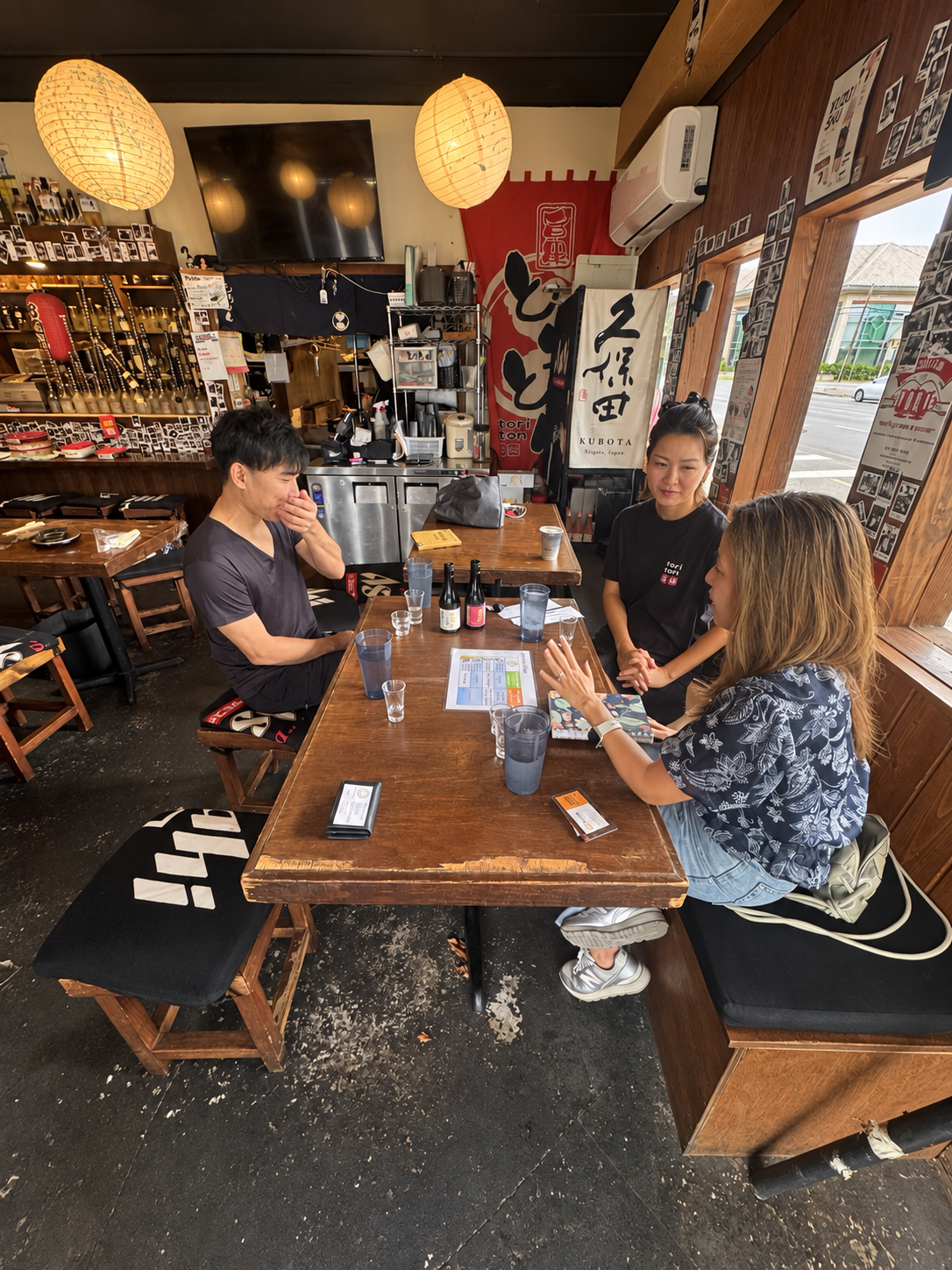
Same category. Different discoveries.
During the tasting, we compared two junmai daiginjo sake from the same brewery. Despite sharing a category, their aromas, weight, and finish felt different. One came across as lighter; the other had more depth and presence. The conversation moved from a label on a bottle to what each person actually noticed.
We also discussed the work behind those differences. Koji helps turn rice starch into sugars, and yeast turns those sugars into alcohol. The rice, water, polishing, yeast, and brewing choices all contribute to the result. A category alone cannot tell the whole story of a sake’s flavor.
The instructor suggested two useful ways to describe what we taste: lighter to fuller-bodied, and sweeter to drier. These are separate qualities. Comparing the sake on our own menu can help us explain a choice in clear, everyday language.
Food and the guest’s preferences matter, too. Asking what they usually enjoy, then tasting sake alongside our dishes, gives us a starting point for a recommendation. The most useful explanation is one we can give in our own words.
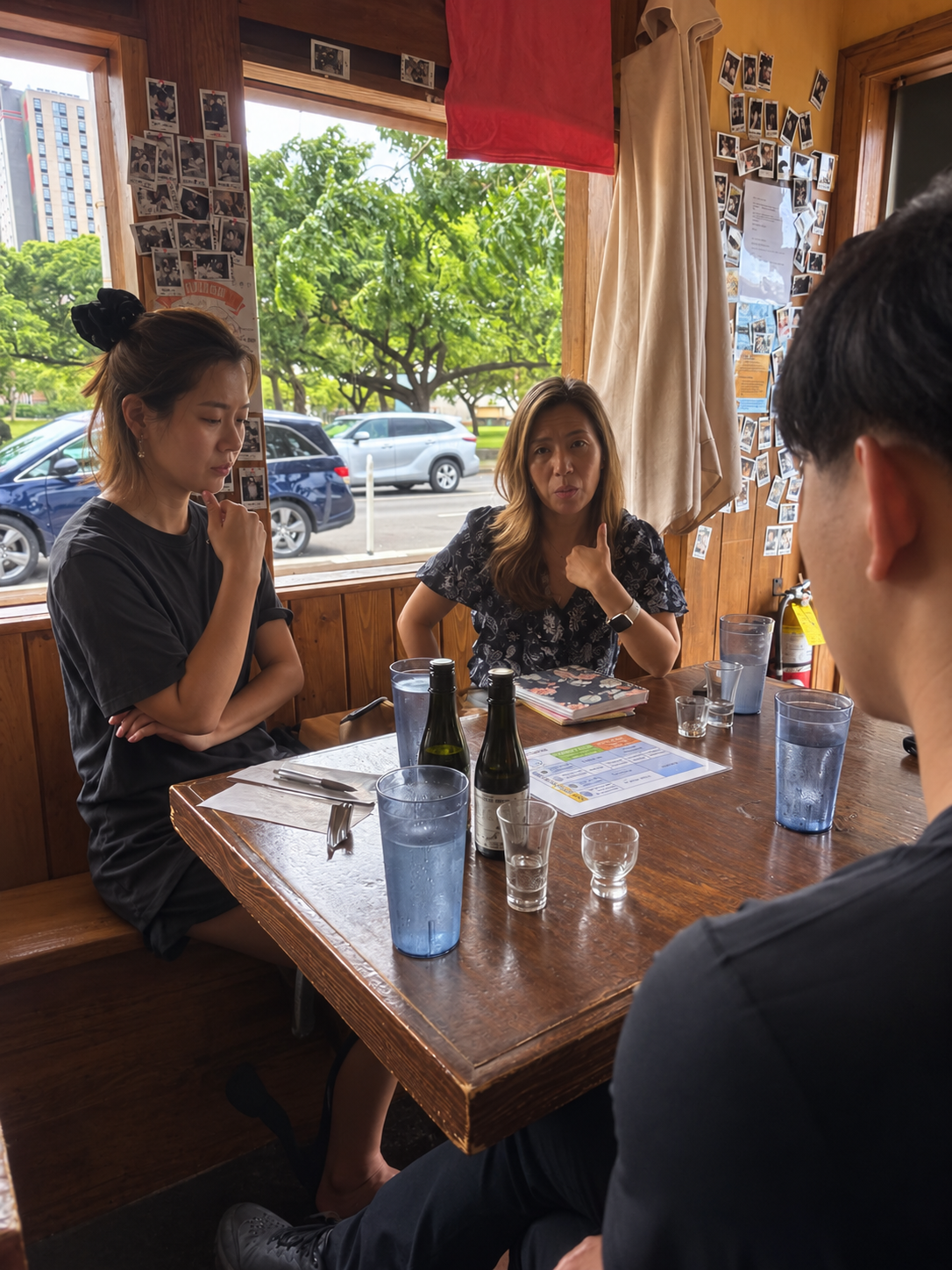
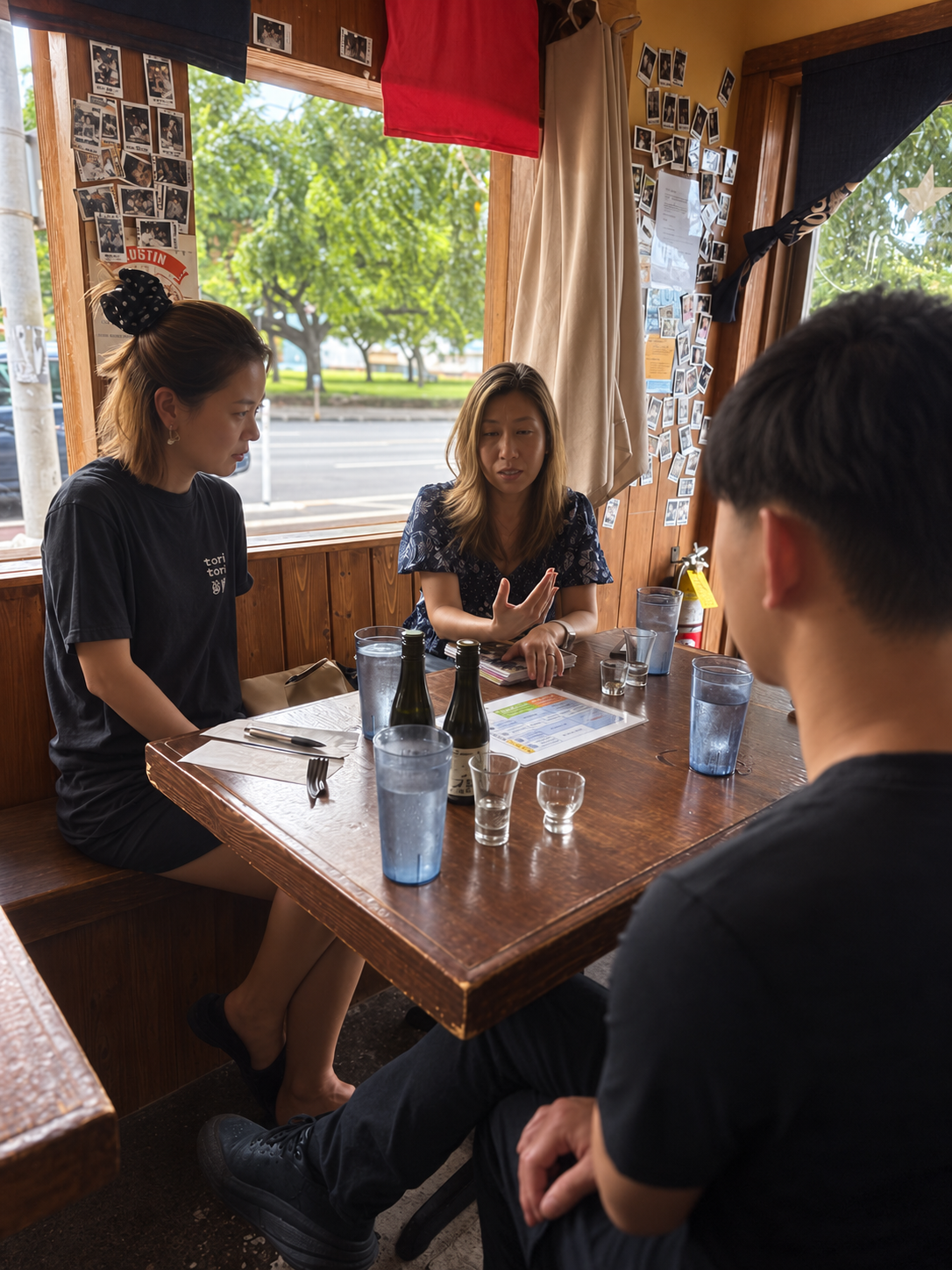
Let’s make room for more curiosity.
Another idea from the session was wa-jo-ryo-shu: harmony among people helps create good sake. The instructor connected it with teamwork in a brewery. It resonates with our restaurants, where the kitchen, drinks, and service teams work together to create a guest’s experience.
We want to build on this workshop by inviting more employees to take part and expanding opportunities to study sake together. Learning about flavor and culture can help us feel more confident in service—and make our everyday work more interesting.
You do not need to be a sake expert. Wanting to understand the menu, explain a recommendation, or learn more about Japanese culture is a great place to begin. Questions and different perspectives are welcome.
LEARNING TOGETHER / SAKE WORKSHOP
Interested in learning with us?
We plan to invite participants to future sake workshops. Dates and participation details will be shared internally once confirmed.
Read more stories in the September issue